

The beautiful Amalfi Coast: A place you must see
The Amalfi Coast is one of those places that feels almost too beautiful to be real. Colorful villages on the mountainsides, overlooking the blue Mediterranean Sea, with winding roads leading to hidden beaches, charming piazzas, and breathtaking viewpoints around every corner.
From the colorful streets of Positano and the historic charm of Amalfi to the peaceful beauty of Ravello, each town has its own character and something special to discover. Add incredible Italian food, fresh seafood, lemon groves, beautiful flower vines, and spectacular sunsets, and it's easy to understand why the Amalfi Coast has become one of Italy's most beloved destinations.
Whether you're looking for a romantic getaway, an adventurous hiking trip, or simply a place to slow down and enjoy la dolce vita, the Amalfi Coast has something for everyone. However, if you follow some of the typical tourist mistakes, your trip can become one of your least pleasant experiences in Italy! Below, I'll share our favorite places, experiences, restaurants, and practical tips to help you make the most of your visit.
What is the best way to get to Amalfi:
Personally, we prefer to drive our own car, set up camp in one place, and then move by ferry, but we are familiar with driving in Italy. If you're traveling from Naples to the Amalfi Coast by public transportation, I would choose the ferry whenever it's operating. It's generally the easiest, most scenic, and least stressful option, especially in spring and summer when road traffic along the coast can be awful.
During the main season, high-speed ferries leave from Molo Beverello in Naples and travel directly to Positano or Amalfi. The trip to Positano can take about 1–1¼ hours, while Amalfi is roughly 1¾–2 hours, depending on the service. The ferry is my favorite because you avoid the notorious coastal traffic and get spectacular views of the Bay of Naples, Sorrento Peninsula, and Amalfi Coast along the way.
From Naples Airport: If you're arriving in Naples by plane, you can take the Alibus from Naples Airport to Molo Beverello, where you'll find the ferry terminal. The Alibus also connects Napoli Centrale train station with the port, making it a convenient option if you're arriving by train.
If you're traveling on a budget, another option is to take the Circumvesuviana/EAV train from Naples to Sorrento, and then continue along the Amalfi Coast by SITA bus. This option is considerably cheaper than taking the ferry, but it takes longer and can be challenging during the busy summer months. The buses can get extremely crowded, and heavy traffic along the winding coastal roads can cause significant delays.
These are the famous buses you often see on YouTube and Instagram making what look like impossible maneuvers around the cliffs! I have to admit, as stressful as it can sometimes be, I think riding one of these buses at least once is part of the Amalfi Coast experience. It's definitely an adventure!
Another great option is taking the high-speed train from Naples to Salerno and then catching a ferry from Salerno to one of the coastal towns. This route offers some of the most beautiful views of the Amalfi Coast from the water and allows you to experience the coastline from a completely different perspective.
Alternatively, if comfort and convenience are more important to you than sticking to a
budget, hiring a private driver is an excellent option. Many taxi and transportation companies offer private transfers for tourists, but I can personally recommend this company, which I have used on several occasions.
They are extremely professional, reasonably priced, and always provide clean, comfortable vehicles. From airport transfers to full-day excursions, their service has consistently been excellent, and they truly give you the VIP treatment from start to finish (this is my personal experience; I am not associated with this company nor do I receive commission).
One important thing to keep in mind when planning your trip is the season. Ferry services are seasonal and do not operate year-round, so always check the current schedule before making your plans.
Personally, I don't recommend visiting the Amalfi Coast between November and March. While the coastline is still beautiful, many hotels, restaurants, shops, and tourist services close for the winter season, and transportation options are much more limited. The Amalfi Coast truly comes alive in the spring and summer, when you can enjoy the beaches, ferries, restaurants, and vibrant atmosphere that make this destination so special.
Which towns should I visit?
One of the things that makes the Amalfi Coast so special is that it isn't just one destination; it's a collection of 13 unique towns and villages, each offering something completely different. The coastal road stretches for about 50 kilometers (31 miles), winding along dramatic cliffs and through colorful villages overlooking the Mediterranean. Some towns are lively and full of restaurants, shops, and beaches, while others are tiny communities where life moves at a much slower pace.
The 13 towns are Positano, Praiano, Furore, Conca dei Marini, Amalfi, Atrani, Ravello, Scala, Minori, Maiori, Tramonti, Cetara, and Vietri sul Mare.
You certainly don't need to visit all 13 to enjoy the Amalfi Coast, but exploring beyond the most popular destinations can reveal some of the area's best-kept secrets. Each town has its own personality, and part of the fun is discovering which one becomes your favorite.
I have visited most of these towns, so I will share my personal experiences and recommendations for them.
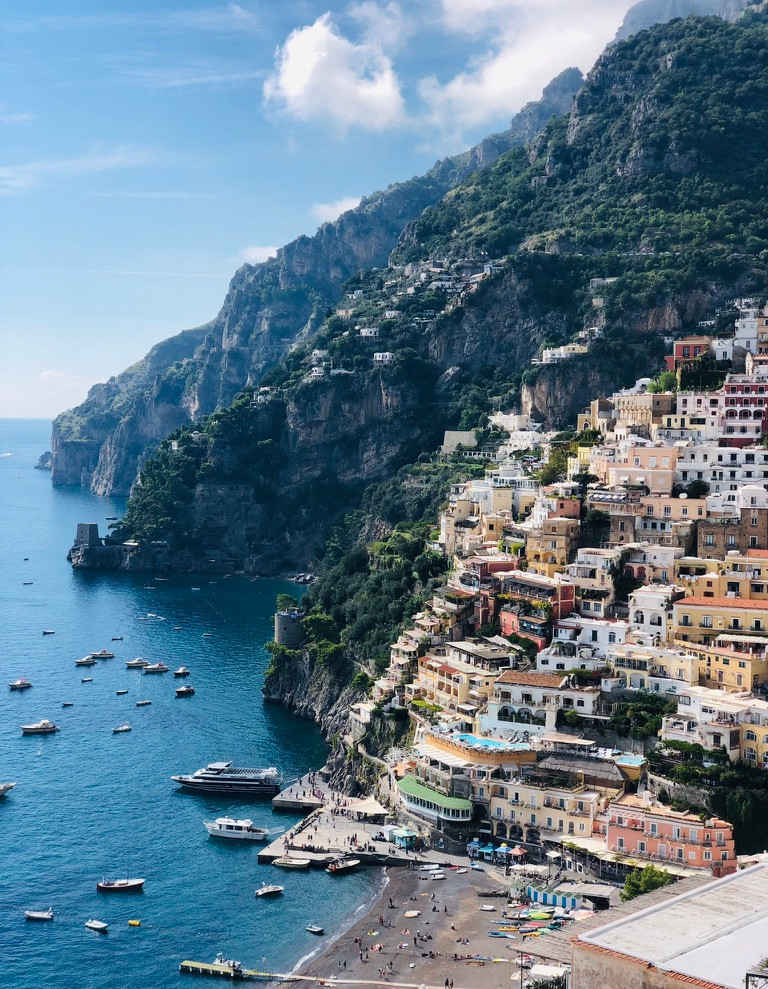
Positano: If there is one town that perfectly captures the beauty of the Amalfi Coast, it is Positano. With its colorful houses cascading down the cliffs toward the turquoise Mediterranean Sea, it's easy to see why this picturesque village has become one of Italy's most photographed destinations. At the same time, Positano is probably the most expensive town to stay in. I have tried for 4 years to find a reasonably priced hotel in this area, but the prices are significantly higher in the nearby towns. I recommend staying in a different town and taking a day trip to Positano.
Positano is a place best explored on foot. Its narrow, winding streets are lined with charming boutiques, local artisan shops, cafés, and restaurants, many of which offer breathtaking sea views.
At the bottom of the town is the famous Spiaggia Grande, Positano's main beach and one of the most iconic beaches on the Amalfi Coast. One thing to keep in mind is that Positano is built almost entirely on a hillside, meaning you'll be walking up and down ramps and stairs throughout your visit. Comfortable shoes are a must, especially if you're exploring the town for several hours. Positano is also one of the best places to enjoy shopping on the Amalfi Coast. The town is famous for its handmade leather sandals, linen clothing, locally crafted ceramics, and lemon-inspired products that make wonderful souvenirs.
The street of Positano
If you've read my blog about the Path of the Gods, you'll know that the hike ends in the beautiful town of Positano. After completing the trail, one of our favorite traditions is celebrating with a meal at Adamo ed Eva, the rooftop restaurant at Hotel Eden Roc.
This restaurant has become a must-visit for us every time we're in Positano. The staff is incredibly welcoming, the food is consistently outstanding, and the panoramic views over the colorful hillside and Mediterranean Sea are simply unforgettable. We've dined here at least eight times over the years, and every single visit has exceeded our expectations.
After a long hike, there's no better reward than enjoying authentic Italian cuisine and a bottle of local wine while taking in one of the most breathtaking views on the Amalfi Coast.
Restaurant Adam ed Eva

Praiano: Located near Positano, Praiano is a less popular and less visited town that offers a quieter, more authentic atmosphere, making it the perfect destination for travelers looking to slow down and experience local life. We stayed at Hotel Margherita in November, which offered an affordable, beautiful room with an excellent breakfast. However, when we tried to visit again in June, the price had more than doubled.
One of the things we enjoyed the most about Praiano was that, unlike the bustling streets of Positano, you'll find peaceful alleys, charming cafés, and scenic terraces where you can relax and take in the beauty of the coastline. There is a small, windy trail descending from the piazza located next to the Church of San Gennaro that leads down to a small marina where you can rent a kayak or just enjoy the water.
Although locals mention that you can easily access the Path of the Gods from Praiano, our experience was quite different. To reach the main trail, we had to climb a steep mountainside for more than an hour before arriving at the official starting point featured in my hiking blog. It was one of the most physically demanding climbs I've done in years, and while the views were incredible, it's not a route I would choose again. For us, starting the hike from Agerola was a much more enjoyable experience.
That said, if you're an experienced hiker looking to add an extra challenge to an already spectacular trail, beginning from Praiano might be just the adventure you're looking for.
Praiano
Furore: This small village is tucked into the cliffs between Praiano and Amalfi, and is one of the smallest and most dramatic villages on the Amalfi Coast. Known as the "town that doesn't exist" because its houses are scattered along the steep mountainside rather than gathered around a traditional town center, Furore offers spectacular views and a peaceful escape from the busier coastal towns. It is best known for the famous Fiordo di Furore, a narrow fjord-like gorge where a tiny beach sits beneath towering cliffs. The dramatic scenery makes it one of the most photographed spots along the coast and a must-see for anyone exploring the area. This is also a famous site for the Red Bull Cliff Diving event.
Fiordo di Furore
Amalfi: I feel like you can't visit the Amalfi Coast without visiting Amalfi itself. After all, the town gave the entire coastline its name! Unfortunately, because of its popularity and reputation, Amalfi is also one of the most crowded—and, in my opinion, somewhat overrated—towns on the coast. During the busy summer months, the narrow streets and main piazza can become packed with tourists, making it difficult to fully appreciate the town's charm.
That said, Amalfi is still worth a visit. The town is surrounded by dramatic cliffs covered with colorful houses, with the Mediterranean stretching out in front of them. Its famous beach sits right in the heart of town, making it a beautiful place to stop for a swim or simply enjoy the scenery.
The centerpiece of Amalfi is Piazza Duomo, home to the magnificent Amalfi Cathedral (Duomo di Sant'Andrea). The cathedral's striking staircase and distinctive architecture make it impossible to miss, and inside you'll find a crypt dedicated to Saint Andrew the Apostle, whose relics are believed to be housed there.
Beyond the cathedral, Amalfi is filled with narrow alleyways, small shops, cafés, restaurants, and local businesses. It's also a convenient transportation hub, with ferries and buses connecting it to many of the other towns along the coast.
While Amalfi may not be my favorite town on the coast, I still recommend spending at least a few hours here. Visit the cathedral, walk through the historic center, grab a lemon granita or gelato, and take in the views before continuing your journey. Just be prepared for crowds, especially during the middle of the day in the summer.
The town of Amalfi

Ravello: Ravello is located high above the Amalfi Coast, offering a completely different perspective from the seaside towns below. Instead of beaches and bustling waterfronts, you'll find elegant villas, peaceful gardens, charming piazzas, and some of the most breathtaking panoramic views in all of Italy. If you're looking for a quieter and more relaxing atmosphere, Ravello is a destination you won't want to miss.
The town is best known for its two magnificent villas: Villa Rufolo and Villa Cimbrone. Villa Rufolo is famous for its beautifully landscaped gardens and its annual Ravello Music Festival, while Villa Cimbrone is home to the iconic Terrace of Infinity, one of the most photographed viewpoints on the Amalfi Coast and set to many movies. Standing on the terrace, surrounded by marble busts overlooking the endless blue Mediterranean, is an unforgettable experience.
Villa Cimbrone and Villa Rufolo
Ravello's historic center is small but full of character. The lively main square, Piazza Duomo, is lined with cafés, restaurants, and local shops, making it the perfect place to relax with a cappuccino or enjoy a gelato.
One thing to keep in mind is that Ravello is not located directly on the coast. It sits high in the mountains above Amalfi, so you'll need to take a winding bus ride, drive, or taxi to reach it. In my opinion, however, the journey is absolutely worth it. I would also recommend visiting Ravello when the weather is not too hot. It is beautiful in the spring or late summer (September). I highly recommend Hotel Villa Amore. For an in-depth review of this hotel, visit the "hotel reviews" page on my blog.
Ravello
Maiori and Minori: Often overlooked in favor of Positano and Amalfi, Maiori and Minori are two charming seaside towns that offer a more relaxed and authentic Amalfi Coast experience. They are home to some of the largest beaches on the coast, making them an excellent choice for travelers who want to enjoy the sea without the overwhelming crowds.
In my opinion, this is one of the best areas to stay when visiting the Amalfi Coast. Accommodations are generally more affordable than in the better-known towns, and both Maiori and Minori have convenient ferry connections, making it easy to explore destinations like Positano, Amalfi, and Capri without driving.
The two towns are connected by the beautiful Sentiero dei Limoni (Path of the Lemons), a scenic walking trail that winds through fragrant lemon groves and offers wonderful views of the coastline. The hike is relatively easy and provides a peaceful break from the busier tourist areas.
Sentiero dei Limoni
Maiori is also home to my favorite restaurant in all of Italy—and that's saying a lot! We've celebrated several special occasions there and have returned many times with family and friends. Set inside a beautifully restored historic watchtower overlooking the sea, the restaurant offers breathtaking views, exceptional service, and a tasting menu that is simply unforgettable.
On our most recent visit, we discovered that you can also rent sunbeds around the tower and spend the day swimming in the crystal-clear waters below. I had no idea this was an option, and it quickly became my favorite place to relax and enjoy the sea on the entire Amalfi Coast. If you're looking for a unique beach experience away from the crowds, I can't recommend it enough. You can visit their website for more information https://torrenormanna.ovh/
Ristorante and Lido Torre Normanna
We're not big fans of long, sandy beaches. My kids are always looking for a little more adventure: cliffs to jump from, caves to explore, and crystal-clear waters perfect for snorkeling.
If that sounds like your kind of beach day, I highly recommend Spiaggia Acquachiara, located near Torre Normanna. Reaching the beach requires descending (and later climbing back up!) a long staircase carved into the cliff, but the effort is absolutely worth it.
The beach is peaceful, incredibly scenic, and surrounded by dramatic rock formations that create fantastic opportunities for swimming, snorkeling, and exploring the coastline. The water is exceptionally clear, making it one of the most beautiful spots we've visited on the Amalfi Coast.
When we first visited, the beach was divided into a private beach club and a public section. However, as of summer 2026, the entire beach is open to the public, making this hidden gem even more accessible to everyone willing to make the climb.
Spiaggia Acquachiara in Maiori
As far as accommodations in the area, we always stay at Hotel Due Torre. A more in-depth review of this hotel you can click here: https://www.travelingbugblog.com/post/mairori-amalfi-coast-residence-hotel-due-torri
Vietri sul Mare: Often considered the gateway to the Amalfi Coast, Vietri sul Mare is the first town you'll reach when traveling from Salerno and one of the easiest to visit from Naples. Located just a 45-minute drive from Naples, it's an excellent destination for a day trip or the perfect place to begin your Amalfi Coast adventure.
Vietri sul Mare is world-famous for its beautiful hand-painted ceramics, a tradition that has been part of the town's history for centuries. As you stroll through its charming streets, you'll find countless artisan shops selling everything from colorful dinnerware and serving platters to decorative tiles, vases, and handmade souvenirs. Even the town itself is decorated with vibrant ceramic artwork, from street signs and benches to staircases and building facades, making every corner feel like an open-air art gallery.
One of the town's most recognizable landmarks is the Church of San Giovanni Battista, whose striking dome is covered in brilliant green, yellow, and blue ceramic tiles. It's one of the most photographed buildings on the Amalfi Coast and perfectly reflects Vietri's artistic heritage.
Beyond shopping, Vietri offers a relaxed atmosphere with several cafés, restaurants, and a pleasant beach where you can swim or enjoy a seaside lunch. Compared to the more famous towns of Positano and Amalfi, it tends to be much less crowded, allowing you to explore at a slower pace and experience a more authentic side of the coast.
If you're looking for the perfect souvenir to bring home from Italy, this is the place to find it. We never leave Vietri without purchasing at least one beautiful ceramic piece, not only because they're handcrafted and unique, but because they remind us of the colorful charm of the Amalfi Coast every time we use them at home.
The streets of Vietri Sul Mare
Final Thoughts
The Amalfi Coast is one of those destinations that truly lives up to the hype. From the colorful cliffside villages of Positano and Amalfi to the peaceful charm of Praiano, Ravello, and Maiori, each town offers its own unique character and unforgettable views. Whether you're hiking the Path of the Gods, relaxing on a hidden beach, enjoying fresh seafood overlooking the Mediterranean, or simply getting lost in the narrow streets, every day brings a new adventure.
My biggest piece of advice is to plan, slow down, and explore beyond the most famous spots. Some of our favorite memories came from discovering quiet beaches, family-owned restaurants, and lesser-known villages that many visitors simply pass by.
I hope this guide helps you plan an unforgettable trip to one of Italy's most breathtaking destinations. No matter how many times we visit, we always leave already dreaming about our next trip back to the Amalfi Coast.


Comments